
If you’ve ever wondered what’s actually inside that lock on your door, you’re not alone. Understanding the parts of a lock helps you talk to a locksmith, spot problems early, and take better care of your home security.
The main parts of a lock are the cylinder (where your key goes), the knob or handle, the latch bolt, the deadbolt, and the spindle that connects the two sides of the door. On the outside, you’ll see the faceplate, escutcheon, and backplate. Then there’s the strike plate on your door frame, which is where the bolt actually lands when you close the door.
Sounds simple, but each piece matters. Let’s break it down so you actually know what you’re looking at next time something feels off with your lock.
The Main Components of a Lock
A lock isn’t one solid block. It’s a system of moving parts working together. Think of it like a car engine, except way simpler and way more important for your safety.
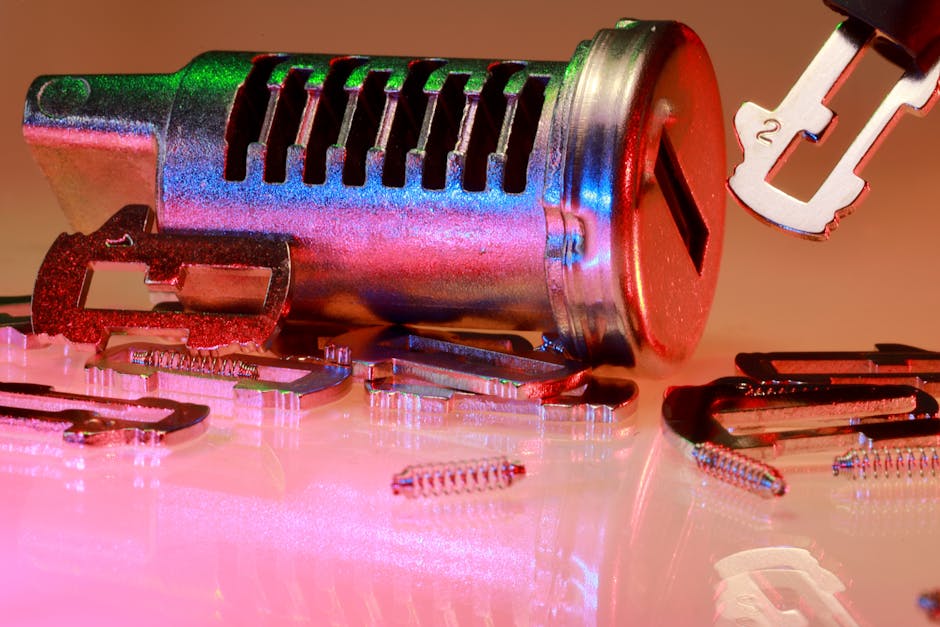
The cylinder is where you stick your key. It’s the round part that spins when you turn the key. Inside the cylinder are tiny pins at different heights. When you insert the right key, those pins line up perfectly, and the cylinder rotates. That’s what unlocks the door.
Related: Cylinder Lock for Storage Unit: How to Choose & Install
The knob or handle is what you actually turn with your hand. On most residential doors, you’ll have two knobs, one on each side. They look simple, but they’re connected to the latch bolt mechanism underneath.
Related: Residential Lock Installation in Wasco: A Homeowner’s Guide
The latch bolt is the angled metal piece that actually slides in and out of the strike plate on your door frame. When you close the door, the latch bolt springs into place and holds the door shut. It’s not as secure as a deadbolt, but it’s the standard lock on most doors.
The deadbolt is your heavy-duty security upgrade. Unlike the latch bolt, it doesn’t spring out on its own, and it’s not spring-loaded. You have to actively turn the key or the knob to slide it in or out. This makes it much harder to force open with a credit card or bump attack.
Related: Door Lock with Key: Types, Security & When to Call a Pro
The spindle is an often-overlooked but critical part. It’s the metal bar that runs through the middle of your lock assembly, connecting the knobs on both sides of the door. When you turn one knob, the spindle rotates and moves the latch bolt.
If you’re dealing with a lock that feels loose or sloppy, the spindle might be worn out or misaligned. This is the kind of thing Joes Lock And Key can spot and fix quickly without replacing the whole lock.
The Exterior Parts You See Every Day
The outside of your lock has decorative and protective components that most people don’t think about until something breaks.
The faceplate is the flat face of the lock mechanism. It’s the metal panel you see when you look at the edge of the door. The faceplate is usually beveled or angled, and it’s what the latch bolt or deadbolt slides through.
The escutcheon is the decorative or protective plate around the lock. It covers the hole in your door and makes the lock look finished. On some doors, the escutcheon is purely decorative (brass, chrome, or brushed nickel). On others, it’s protective, shielding the lock cylinder from damage or tampering.
The backplate is on the inside of the door, behind the knob and cylinder. It’s what you see when you look at the lock from the interior side. The backplate holds everything together and gives the lock structure.
The chassis is the main body or frame of the lock mechanism. It’s the housing that holds all the moving parts, pins, and springs. Without a solid chassis, none of the other parts would work together properly.
The trim is the finishing piece, usually the metal ring around the exterior knob or cylinder. Trim is both functional and aesthetic, and it’s often the first thing to show wear or damage if someone tries to force your door.
The Strike Plate and Why It Matters
Here’s a part that gets zero attention until your door swings open when it shouldn’t: the strike plate.
The strike plate is the metal plate mounted on your door frame. When you close the door, the latch bolt or deadbolt slides into the opening in the strike plate. It’s basically the target that your lock aims for every single time you close the door.
A worn, damaged, or misaligned strike plate is one of the biggest security weak spots in your home. If the strike plate is loose or bent, your latch bolt won’t catch properly, and your door won’t stay fully closed. Worse, if someone pushes on the door, it might pop open even though you locked it.
Inspect your strike plate regularly. Look for dents, rust, or screws that have come loose. If you see daylight between the strike plate and the door frame, that’s a red flag. The strike plate should sit flush against the frame.
If you notice issues with your strike plate or it’s not aligned with your latch bolt or deadbolt, Joes Lock And Key can replace or realign it without any hassle.
How These Parts Work Together

All these components work as a system. You insert your key into the cylinder. The key pushes the internal pins up to the shear line. The cylinder rotates. That rotation connects to the knob or handle. The spindle turns. The spindle pulls the latch bolt (or turns the deadbolt) inward. The bolt slides out of the strike plate, and the door opens.
Reverse the motion, and the bolt slides back into the strike plate, locking you in or out.
When one part gets worn or damaged, the whole system suffers. A damaged cylinder makes the key hard to turn. A bent latch bolt won’t retract smoothly. A loose spindle makes the knob feel floppy.
That’s why understanding each part helps you spot problems early. A little maintenance goes a long way.
Basic Lock Maintenance You Can Do Yourself
You don’t need a locksmith to keep your locks running smoothly. Some preventative care is quick and easy.
Clean the keyway. Dust and dirt build up in the keyhole over time. Grab a can of compressed air and spray short bursts into the keyway. Do this a few times a year, especially if you live in a dusty area. This keeps your key from sticking and reduces wear on the cylinder pins.
Check the strike plate. Once every few months, look at your strike plate. Make sure it’s not loose, bent, or rusted. Tighten any loose screws with a screwdriver. If it’s damaged, it’s worth replacing.
Lubricate sparingly. If your lock is stiff, you might be tempted to spray WD-40 or oil into it. Don’t. Lubricant attracts dust and makes things worse. If your lock feels stuck or stubborn, that’s a sign something inside needs attention from a professional.
Inspect the knob and spindle. Give your knob a gentle wiggle. It should be solid with no wobbling or play. If it’s loose, the spindle or screws might be loose. Tighten the set screws on the knob itself (usually on the side).
These simple steps add years to your locks. But if you notice something that feels wrong, don’t ignore it. A professional can diagnose and repair problems before they leave you locked out.
When to Call a Professional
Some lock issues are beyond a quick tighten or spray of air. If your key doesn’t turn smoothly, the lock feels mushy, or the door won’t stay latched, it’s time to get help.
Weather, age, forced entry attempts, and normal wear all take a toll on locks. A locksmith can repair damaged components, replace worn parts, or upgrade your locks entirely if needed.
Whether you need a lock repair, a new lock installed, or just a professional opinion on your door security, Joes Lock And Key serves the Bakersfield area with fast, friendly service and decades of combined experience.
Frequently Asked Questions
What’s the difference between a latch bolt and a deadbolt?
A latch bolt is spring-loaded and retracts when you turn the knob. A deadbolt requires you to actively turn a key or knob to slide it in or out. Deadbolts are more secure because you can’t retract them by turning the interior knob; they’re designed to require a key from the outside. Most homes have both, with the latch bolt on the main entrance knob and a deadbolt installed above or below it.
Can you replace just one part of a lock, or do you have to replace the whole thing?
It depends on the part and the lock. Some components like the strike plate, spindle, or knob can be replaced individually without touching the rest of the lock. Other parts, like a damaged cylinder, might require replacing the entire lock body if the damage is severe. A locksmith can assess what’s broken and recommend the most cost-effective fix.
How do I know if my lock is failing?
Watch for signs like a key that sticks or won’t turn smoothly, a knob that wobbles or feels loose, a door that won’t latch properly, or a key that breaks easily in the lock. If your lock makes grinding or scraping sounds when you turn it, that’s another red flag. Any of these symptoms means internal parts are wearing out and need attention.
Do I need to replace a lock if it’s just getting old?
Age alone doesn’t mean you need a replacement. If an older lock still functions smoothly, latches properly, and holds a key securely, it’s doing its job. However, if you’re upgrading your security, moving to a new home, or the lock is showing signs of wear, replacement makes sense. Modern locks can also offer better security features like higher-security cylinders that resist picking and bumping.